10 Real Estate Investment Terms You Should Know Before Investing
Real estate is an attractive investment option and is considered a low-risk investment, making it ideal for beginner investors. If you’re planning to start investing in real estate, you’re already making a smart decision. Studying and understanding key terms before investing is essential to help you navigate the market and make informed decisions.
Here’s a guide to 10 real estate investment terms you should know before getting started. Knowing these terms will give you a clearer understanding of the real estate industry and help you analyze investment opportunities more effectively.
1. Presales
Many people familiar with real estate will recognize the term Presales. It refers to the pre-launch price of a property before construction begins. During this period, developers offer units at prices lower than the market value to attract early buyers. Presales often appear in marketing campaigns for new condo projects.
2. Resales
Resales refers to the sale of a property after construction is completed. Prices during resales are generally higher than presales because buyers can see the finished property, including its environment, unit, and common areas. Resales can also refer to reselling a down payment or pre-booked unit before the project is completed.
3. VIP Day
VIP Day is a special day organized by developers for existing or loyal customers, offering exclusive perks such as discounts, gifts, or priority selection of units. It’s a way to reward VIP clients and strengthen customer loyalty.
4. CBD (Central Business District)
CBD refers to the main business district of a city. Properties located in a CBD are near major shopping centers, office buildings, and convenient public transportation. These areas are typically prime locations with high investment potential.
5. New CBD (New Central Business District)
New CBD refers to emerging business districts that are expected to grow in the future. These areas often attract investors looking for high-potential real estate developments.
6. Capital Gain
Capital Gain is the profit earned from selling a property. It’s a key metric for real estate investors, especially those purchasing condos for future resale. Capital gain helps determine whether an investment is worthwhile.
7. Rental Yield Rate
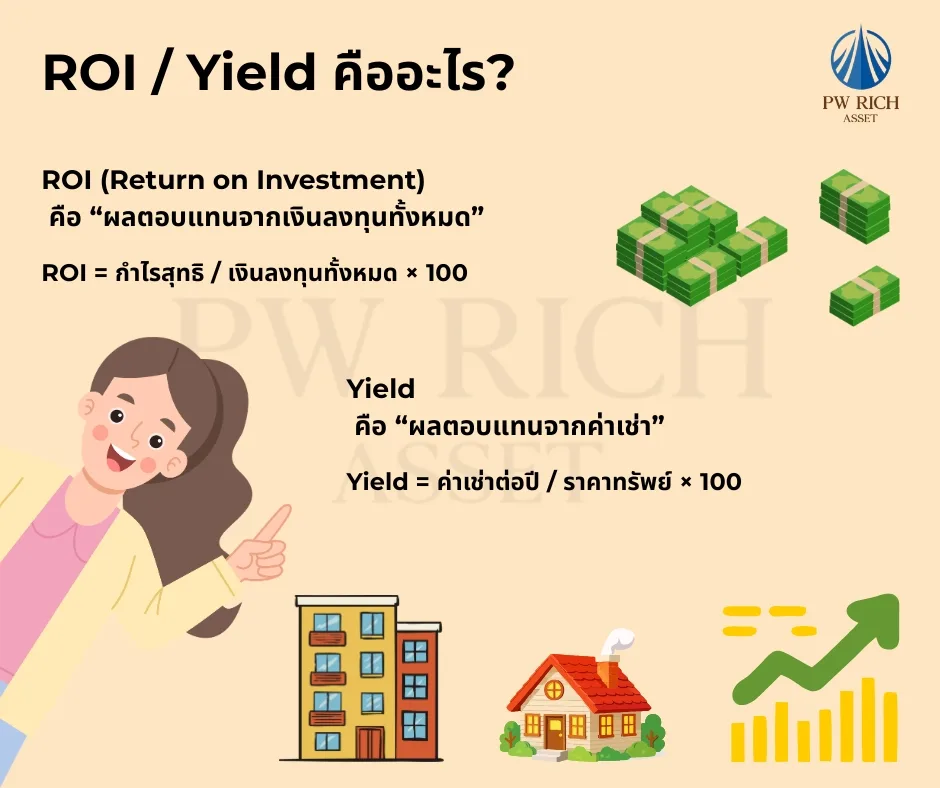
Rental Yield Rate measures the annual return from renting out a property, expressed as a percentage. For example, a good investment property may provide a rental yield of 6–8%. Each project may offer different yields, making this an important factor for investors to consider.
8. Occupancy Rate
Occupancy Rate indicates the percentage of units that are occupied in a project. Higher occupancy rates usually signal high demand, making the property more attractive for investment. Beginner investors should always check this metric before investing.
9. Property Fund
A Property Fund is a type of investment where a fund manager pools money from investors and invests it in real estate such as residential or commercial properties. Profits from selling or renting the properties are distributed among investors.
10. REIT (Real Estate Investment Trust)
A REIT is similar to a property fund but operates on a more international scale. Investors can invest in domestic or international real estate, while a REIT Manager manages the properties and a Trustee safeguards the investors’ assets. REITs allow investors to earn income from real estate without directly owning the property.
Knowing these terms is essential for anyone interested in investing in real estate. Some terms are commonly seen in advertisements, while others are more specialized. Understanding these concepts will help beginner investors make informed decisions and confidently navigate the real estate market.